Credits and trade
Nullbelt Trading Guide: How to Make Credits Trading
Practical Nullbelt trading tips: profitable routes, supply and demand stations, beating the stall spread, fees, fuel costs and using the locker well.
On this page
Trading can make credits in Nullbelt, but only if you trade with other pilots, not just the station stalls. Every price on the Exchange comes from pilots or a small, predictable station stall, so a good trader wins by reading the books, not by luck. This guide covers routes, spreads, fees and fuel: the real costs that decide whether a run makes money. It also shows, with the game's real numbers, why buying from one stall and selling to another rarely pays.
The golden rule of Nullbelt trade routes#
Buy where a commodity is supplied. Sell where it's wanted. Each station has a character per commodity:
| Commodity | Buy at (supply) | Sell at (demand) |
|---|---|---|
| Ore | Cinder | Meridian and Ironwake |
| Water ice | Meridian | Haven-9 and Ironwake |
| Fuel cells | Meridian and Ironwake | Haven-9 |
| Med supplies | Meridian | Haven-9 |
| Tech scrap | Cinder and Ironwake | Meridian |
| Void dust | Cinder | Meridian |
That gives you a natural loop: Cinder to Meridian, Meridian to Haven-9, then back to Cinder. Haven-9 supplies nothing, so the leg back to Cinder usually flies empty, which is the cheapest fuel you'll pay. From Rank 6 · Gunhand, Ironwake adds legs of its own: the table shows what it buys and sells. The direction is right, but the stall's prices alone rarely pay for the trip. See the table below before you load. Base prices per station are on Commodities.
Tip
You can look at any station's book from anywhere. On Market → Trade, Prices elsewhere shows the best prices at the other stations. "No sellers" with a "wanted ₡X" means there's a bid waiting there. "No buyers" means nobody buys at that station right now; the stall buys again after 00:00 UTC. Hover or tap a cell to see whether a pilot or the stall offers the price, and how much the stall has left.
Know your costs before you haul#
A run's profit is:
units × (sell price − buy price) − taker fees − fuel − docking fee
Fuel: every unit aboard costs#
Fuel on departure is your hull's fuel factor × (₡30 + ₡3 per commodity unit aboard), rounded. So each unit you carry has to earn at least ₡3 × your fuel factor just to pay its own way. You also pay the base fuel and a docking fee on every trip, even with an empty hold. Full details are on Travel.
Tip
Pay fuel with fuel cells bought cheaply. One cell covers ₡30 of fuel. At Meridian, which supplies them, the stall sells cells for well under that. At Haven-9, which wants them, a cell costs more than the fuel it covers. Cells in the hold count as cargo, so each one aboard adds ₡3 × your fuel factor to every trip until you burn it. Keep a few, not a mountain.
Fees: be the maker, not the taker#
The taker fee (2% of the filled value, rounded half up) is paid only by the order that crosses the book. A Buy now or Sell now pays it. A limit order that rests and gets filled later pays nothing.
The stall spread: why stall-to-stall is thin#
The station stall quotes ±15% around its centre. If you buy from the stall's ask at one station and sell into the stall's bid at another, you give up both halves of the spread. Then you pay the taker fee twice and the fuel for every unit aboard. Here's what that leaves, worked out from the game's own prices, fee and fuel:
| Commodity | Buy at → sell at | Stall ask → bid | Each unit, after fee and fuel | A full hold (20 units) |
|---|---|---|---|---|
 Ore | Cinder → Meridian | ₡11 → ₡14 | −₡0.5 | −₡40 |
 Water ice | Meridian → Haven-9 | ₡11 → ₡16 | ₡1.5 | ₡0 |
 Fuel cells | Meridian → Haven-9 | ₡22 → ₡26 | ₡0 | −₡29 |
 Med supplies | Meridian → Haven-9 | ₡33 → ₡42 | ₡4.5 | ₡60 |
 Tech scrap | Cinder → Meridian | ₡18 → ₡23 | ₡1.2 | −₡6 |
 Void dust | Cinder → Meridian | ₡115 → ₡165 | ₡41.4 | ₡798 if customs doesn’t scan you −₡10 on average, at a 25% scan |
| Void dust | Cinder → Haven-9 | ₡115 → ₡110 | −₡12.5 | −₡280 |
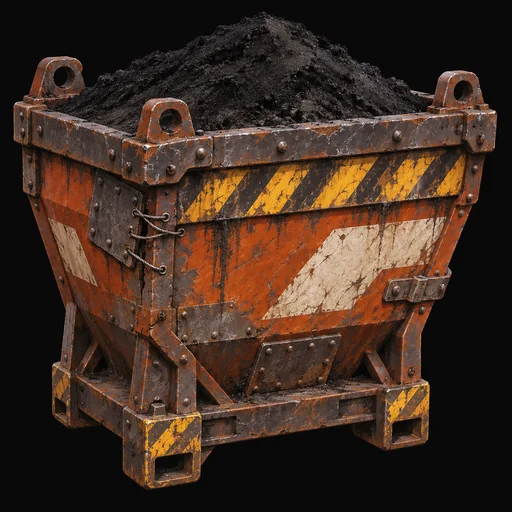 Carbon fines | Cinder → Haven-9 | ₡9 → ₡11 | −₡1.4 | −₡58 |
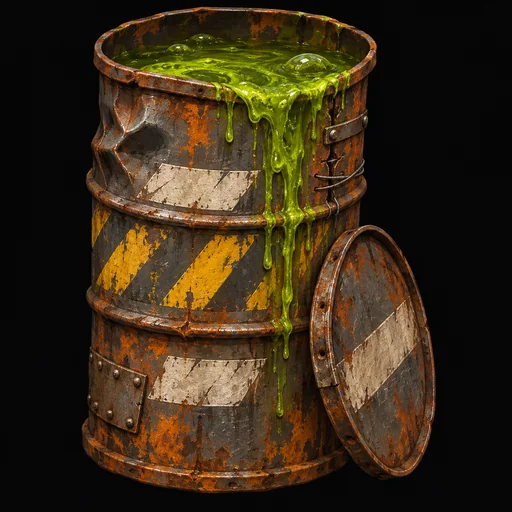 Chem sludge | Haven-9 → Meridian | ₡10 → ₡12 | −₡1.4 | −₡59 |
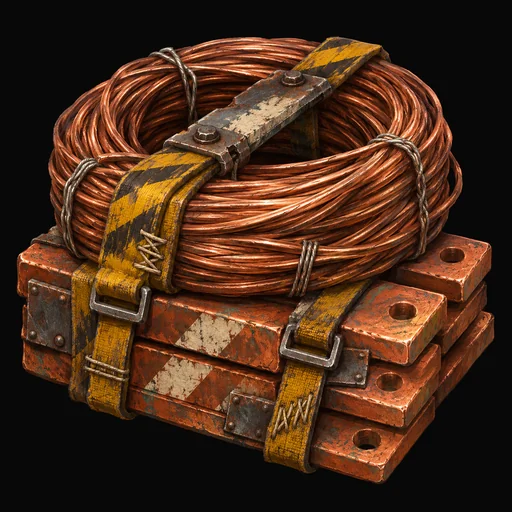 Copper scrap | Meridian → Cinder | ₡11 → ₡13 | −₡1.5 | −₡59 |
The full-hold figure includes the ₡90 of fuel the trip burns with the hold full, so a hold that would fly anyway only has to beat the per-unit figure. Live stall prices move with each station’s reference price, so check Market → Trade before you load.
What the table says:
- Ore and fuel cells lose money stall to stall. Their price gap doesn't beat the fees plus the fuel each unit burns.
- Water ice and tech scrap only just cover their own fuel. They pay only if you're flying that way anyway.
- Med supplies, Meridian to Haven-9, is the one safe commodity with a clear stall-to-stall profit.
- Void dust pays well, but only when customs doesn't scan you. On average, at Meridian's scan chance, a full hold in the starter ship about breaks even. Selling it at Haven-9 instead is safe, but loses money at stall prices.
- Every trip also pays the docking fee, which grows with your rank.
So the money in trading is in beating the stall's prices: buying below its ask and selling above its bid.
Better:
- Rest a buy just above the best bid at the supply station, below the stall's ask. Players inside the stall's spread always fill first, and you pay no fee. It only fills when another pilot sells into it, so it can take a while.
- Rest a sell just below the best ask at the demand station, above the stall's bid. Again, it fills only when another pilot buys.
- Take only when it's worth it: when a pilot's order is clearly better than the stall's, or when you need the goods now.
- Watch the reference price. It follows real player trades at each station. When pilots have been paying more at a demand station, its stall bids more too.
Station character and the stall's daily units#
The stall's daily allowance grows with the number of pilots docked at the station at 00:00 UTC, and the station's character tilts it. At a supply station, the stall sells more and buys less. At a demand station, it buys more and sells less. Each stall resets at 00:00 UTC.
What this means for you:
- Cheap stock at a supply station goes early in the UTC day. When the stall sells out, the next seller is a player, at a player's price.
- A demand station's stall buys a lot, so selling there usually finds a bid. A player who bids above the stall pays you more.
- When a supply stall is sold out, the Broker's crates at Haven-9 are a small backup supply, at a premium. See Broker and black market.
The void dust run: risk and reward#
Void dust is the most valuable commodity and the only contraband. Cinder supplies it and Meridian wants it most. Meridian also runs customs: a 25% scan on arrival that confiscates contraband and sends you to the brig. Haven-9 has no customs and pays less.
Base prices favour the Meridian run, and the table above shows how it plays out at stall prices. When you aren't scanned it's the best haul in the game. On average, after confiscations, it's about even in the starter ship, and selling at Haven-9 loses money at stall prices. Ways to tilt the odds:
- A ship with a scanner suite or customs trait cuts the scan chance, down to a floor of 5%. Even a few points off turn the average positive.
- Better prices. Buying from a pilot below the Cinder stall's ask, or selling to a pilot's bid above the Meridian stall's, widens the margin a lot.
- The Meridian customs contact. From Rank 7 · Corsair, you can earn a contact who sells a bribe for your next Meridian arrival. The bribe lowers the scan chance to 8%. It costs at least ₡1,000, so it only pays on a big load. See Travel.
- Only carry what you can afford to lose. Customs takes all the contraband aboard and sends you to the brig.
Use the locker as a buffer, not a warehouse#
Your storage locker at each station catches goods bought when your hold is full or when you're away, and any cargo that doesn't fit your hold. It's free for 24 hours, then ₡1 a unit per started day, paid when you collect. You can't sell straight from it; collect into your hold first.
A good pattern: rest limit buys at a supply station before you leave. If another pilot sells into them while you're on a run, the goods wait in your locker there. Collect them on your next visit, within the free hours.
Warning
Lots left for 14 days are sold to the stall at its bid, with rent taken out. Don't forget what's in there. Market → Orders lists every lot, when its free time ends and when it would be sold.
Small edges that add up#
- Keep what you'll use. Med supplies repair hull at the Clone Bay, and fuel cells pay your fuel. Selling them and then paying credits for the same thing loses money. See Commodities.
- Watch the Broker. Daily deals often ask for a full stack of one commodity and pay well above its value. Holding a stack can pay off. See Broker and black market.
- The Renown trade boost adds 25% to your profit margin on sales of one chosen commodity for 24 hours. It pays only on units you bought and then sell for more than you paid.
- Daily contracts often ask you to sell a number of a commodity. Units count as soon as they're paid, profit or not.
- Results tell the truth. Market → Orders → Results shows your realised profit per commodity, matched first in, first out, after fees.
Protect your profits#
Your credits on hand are public and can be taken. A flatline takes all of them, and a Shakedown takes a cut. Sale credits from a resting order count as credits on hand too. After a good run, put what you won't spend soon in the bank. It costs a small deposit fee, and the credits are safe there. See Bank and money safety.
Frequently asked questions#
Where should I sell my cargo in Nullbelt?
At the station that wants it. Meridian wants ore, tech scrap and void dust; Haven-9 wants water ice, fuel cells and med supplies. Check Prices elsewhere on Market → Trade before you fly.
What is the best trade route in Nullbelt?
Buy where a commodity is supplied and sell where it is wanted. Cinder supplies ore, tech scrap and void dust that Meridian wants. Meridian supplies water ice, fuel cells and med supplies that Haven-9 wants.
Why do I lose money buying from one stall and selling to another?
At base prices, most stall-to-stall runs lose money or barely break even: the stall's spread, the taker fee on both trades and the fuel for every unit aboard eat the margin. Rest limit orders inside the spread instead.
Is smuggling void dust worth it?
Meridian pays the most for void dust, but its customs can confiscate it and put you in the brig. Stall to stall at base prices, the run pays well when you aren't scanned and about breaks even on average; a ship with a customs trait or better prices make it pay.
Should I bank my trading profits?
Yes, if you are not about to spend them. Credits on hand are public and can be taken by a flatline or a Shakedown; banked credits are safe, for a small deposit fee.